How Reputable Gold Buyers Test Your Gold Right in Front of You
QUICK ANSWER: A reputable gold buyer confirms what your gold is before making any offer, and the honest ones do it where you can see every step. The process usually starts with a look at the stamp or hallmark, then moves through quick screening checks like a magnet test and often a touchstone acid test, and finishes with more precise tools such as an electronic conductivity tester, a specific gravity measurement, or an X-ray fluorescence analyzer that reads the metal without harming it. Each method answers a slightly different question, which is why a careful dealer uses more than one. The point of testing in the open is simple: you should be able to watch how the metal was identified rather than take anyone's word for it.
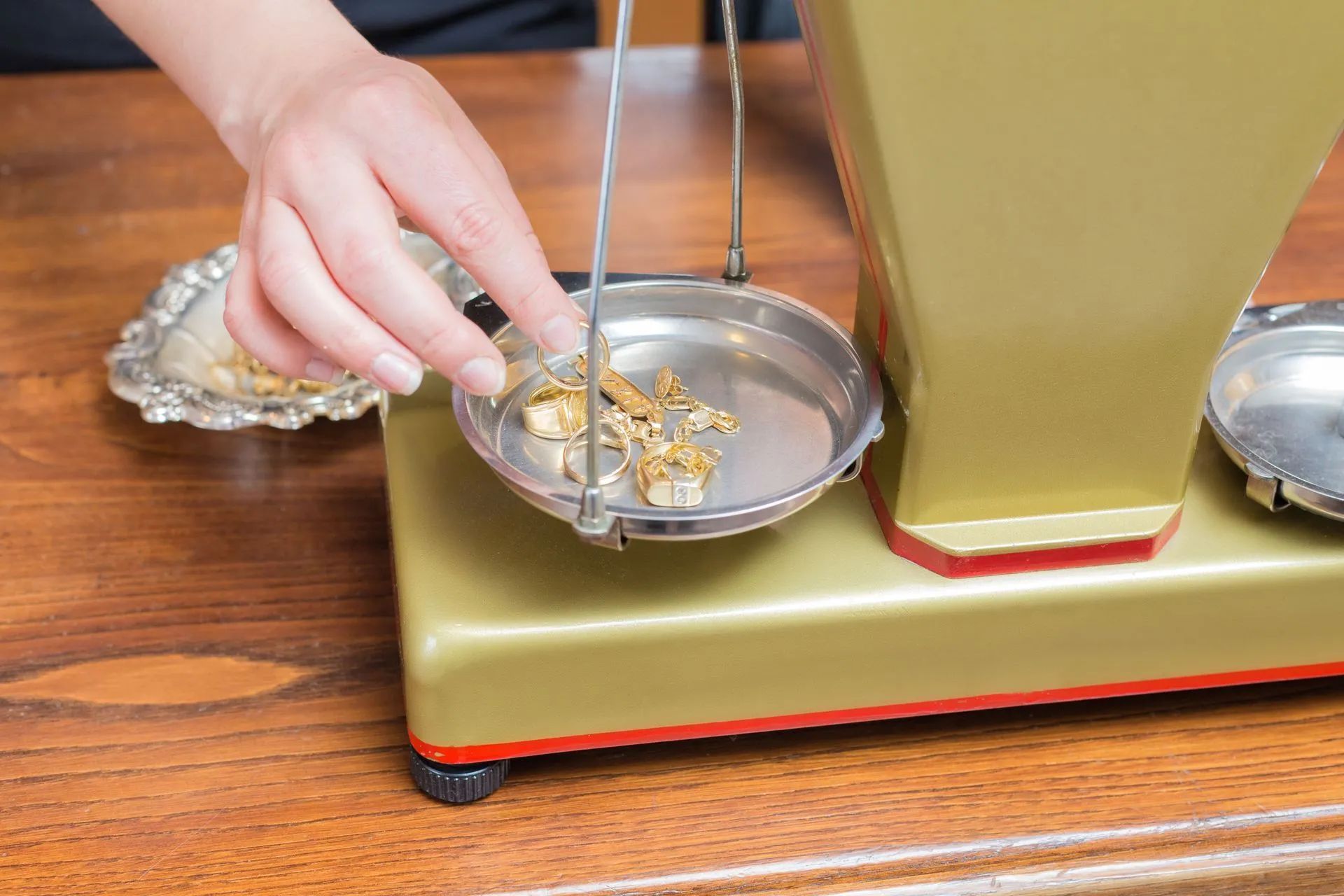
You empty a small pouch onto the counter, a tangle of old chains, a single earring whose match disappeared years ago, and a ring you were told was gold but never wore. Before any of it turns into a number, someone has to figure out what these pieces actually are, and a dealer worth trusting will do that testing right where you can watch it happen. That openness is the whole point, because gold hides its secrets well and a stamp alone does not settle the question.
Understanding what each test does takes the mystery out of the counter. When you know why a buyer reaches for a magnet, drops acid on a scratch, or holds a piece under an analyzer, you can tell the difference between careful work and a rushed guess. Here is what the testing process looks like at a shop that does it properly, step by step.
The Stamp Is a Starting Point, Not Proof
Most gold jewelry carries a small mark that tells you its intended purity. In the karat system you will see stamps like 10k, 14k, 18k, or 24k. In the European system the same purities appear as three-digit numbers: 417 for 10 karat, 585 for 14 karat, 750 for 18 karat, and 999 for pure gold. A stamp reading 925 points to sterling silver rather than gold, and marks like GF or HGE signal gold-filled or gold electroplate rather than solid gold.
Why the stamp comes first
Reading the mark gives a buyer a quick hypothesis about what a piece should be. It is the fastest way to sort a pile and decide which tests to run next.
Why it is never the final answer
Stamps can be worn to the point of being unreadable, they can be applied to pieces that do not actually meet the marked purity, and plated items sometimes carry marks that suggest more gold than is really there. A careful dealer treats the stamp as a claim to verify, not a fact to trust. That is exactly why the testing that follows matters.
Quick Screening: The Magnet and the Eye
Before any specialized tool comes out, a good buyer does two simple things that cost nothing and rule out obvious problems.
The magnet check
Gold is not magnetic. If a piece jumps to a strong magnet, it contains a significant amount of magnetic metal and is not solid gold. A magnet will not confirm purity on its own, because plenty of non-gold metals are also non-magnetic, but it is a fast way to catch certain fakes and mixed pieces early.
A trained visual look
Years behind a counter teach a buyer to notice things a casual seller would miss: green or dark discoloration where plating has worn through, a color that reads slightly off for the marked karat, or wear patterns that reveal a different metal underneath. This look does not replace testing. It tells an experienced eye where to focus it.
The Touchstone Acid Test
The acid test is one of the oldest and most recognizable methods, and it is one you can watch happen at the counter. The buyer rubs the piece against a dark touchstone to leave a small streak of metal, then applies a drop of acid graded to a specific karat. How the streak reacts tells the story. If the mark holds steady under acid meant for its stated karat, the gold is likely at or above that purity. If it fades or dissolves, the piece is lower in gold content than the stamp claims, or not gold at all.
What it is good at
The acid test is quick, inexpensive to run, and effective at separating real karat gold from plated or fake pieces. Watching the reaction with your own eyes is often the moment a seller finally understands what they brought in.
Its honest limits
The acid test leaves a tiny mark on the touchstone and a small scratch on the item, so it is slightly destructive. Its readings are also more of a range than a precise figure, because the result is judged by eye. That is why a thorough dealer does not stop here. The acid test narrows things down, and more precise tools confirm the detail.
TIP: When you take gold in to be evaluated, do not clean, polish, or file your pieces beforehand, and bring any paperwork or original marks along with them. Aggressive home cleaning can scratch surfaces and strip detail that helps identify a piece, and homemade acid or scratch tests can damage jewelry in ways that lower what an honest buyer can offer. Let the tests happen at the counter where they are done carefully.
Electronic and Density Tests
Beyond the touchstone, two methods add precision without depending on a person's eye reading a reaction.
Electronic conductivity testers
These handheld devices measure how well a metal conducts electricity, and because different metals conduct differently, the reading helps identify what a piece is made of. Conductivity testing is fast and non-marking, though it has limits: certain alloys and mixed metals conduct at similar levels, and even the temperature of the item can nudge a reading. A buyer uses it as one input among several rather than a lone verdict.
Specific gravity, the density test
Pure gold is remarkably dense, close to 19.3 grams per cubic centimeter, far heavier than most metals it might be confused with. By weighing a piece in air and then submerged in water, a buyer can calculate its density and compare it against what solid gold of a given purity should measure. This test is especially good at exposing pieces that are hollow, filled, or built around a non-gold core, because the density comes out wrong even when the surface looks convincing.
The X-Ray Analyzer
The most precise tool many dealers keep on the counter is an X-ray fluorescence analyzer, often called an XRF. The device sends X-rays into the metal and reads the energy that comes back, which tells it exactly which elements are present and in what proportions, usually within seconds.
Why buyers rely on it
XRF is non-destructive, so it reads a piece without leaving a mark, and it reports the full makeup of the metal rather than a simple pass or fail. It can show the precise gold content alongside the other metals in an alloy, and it is very good at flagging gold plating over a base metal, one of the harder fakes to catch by eye.
Where it fits with the rest
No single test is the whole answer, which is why a careful buyer layers them. The stamp suggests, the magnet and acid screen, the density check catches hollow or filled pieces, and the analyzer confirms the composition with numbers. When several methods agree, both you and the buyer can stand behind the result.
Why Testing in the Open Matters
Everything above shares one common thread: you should be able to watch it. A dealer who
tests your gold in front of you, explains what each tool is checking, and shows you the readings is a dealer treating you as a participant rather than a spectator. That transparency is the difference between a fair evaluation and a leap of faith.
WARNING: Be cautious with any buyer who names a firm number before testing your gold, who wants to take your pieces into a back room out of your sight, or who pressures you to decide on the spot. A dealer confident in their process has no reason to hide it. If you cannot watch the testing or the buyer will not explain what each tool is checking, treat that as a signal to slow down and get a second opinion before you part with anything.
An offer for gold is generally built from two things the testing establishes, the purity of the metal and its weight, measured against the current market. This article stays away from prices and from any guidance on buying or selling as an investment, because those are separate questions and the financial or tax side of a sale belongs with a qualified professional who knows your situation. What testing settles is the more basic and more important question first: what is this piece really made of? Once you have watched that answered honestly, everything that follows rests on solid ground.
Frequently Asked Questions
How do gold buyers test gold to know it is real?
Reputable buyers use a layered process. They read the stamp, run quick checks like a magnet and acid test, then confirm with conductivity testers, specific gravity, or X-ray fluorescence. A trustworthy dealer performs these tests where you can watch.
Does testing gold damage my jewelry?
It depends on the method. The acid test leaves a tiny scratch, so it's mildly destructive. Electronic testers, specific gravity measurements, and X-ray fluorescence are non-destructive. Ask which method the buyer plans to use beforehand.
Can I just trust the karat stamp on my gold?
Not on its own. Stamps like 14k or 585 indicate intended purity, but stamps wear down or apply inaccurately, sometimes appearing on plated items. An honest buyer treats the stamp as a claim to verify through actual testing.
What is an XRF analyzer and why do dealers use it?
An XRF sends X-rays into metal and reads returning energy to identify exact elements and amounts within seconds. Buyers rely on it since it's non-destructive, precise, and flags gold plating over a base metal.
How can I tell if a gold buyer is trustworthy?
A clear sign is testing your gold in front of you, explaining each step rather than taking pieces out of sight. Openness, willingness to show readings, and no pressure all point to a trustworthy dealer.
Should I clean my gold before bringing it in to sell?
Better not to. Aggressive cleaning can scratch surfaces and wear away identifying marks, and homemade testing can cause damage affecting evaluation. Bring gold as-is with any paperwork, and let testing happen properly at the counter.
Knowing What You Have Before You Decide
Understanding how gold is tested changes the experience of walking into a shop. Instead of hoping for a fair read, you can follow along, ask why a buyer reached for one tool over another, and recognize careful work when you see it. The stamp starts the conversation, the screening tests narrow it down, and the density check and analyzer settle the composition with real precision. When those methods line up and you watched them happen, you are making decisions from knowledge rather than guesswork.
That is the standard any seller, collector, or family sorting through an estate deserves: clear answers about what a piece is, delivered in the open. If you have gold, coins, or jewelry and want it identified and tested where you can watch every step, Northeast Precious Metals, with 60
years of experience, offers free, no-obligation evaluations in Worcester, Massachusetts, with authenticity testing performed right in front of you. Visit our website to plan your visit and bring your questions with you.
Recent Posts